Please Login To Continue
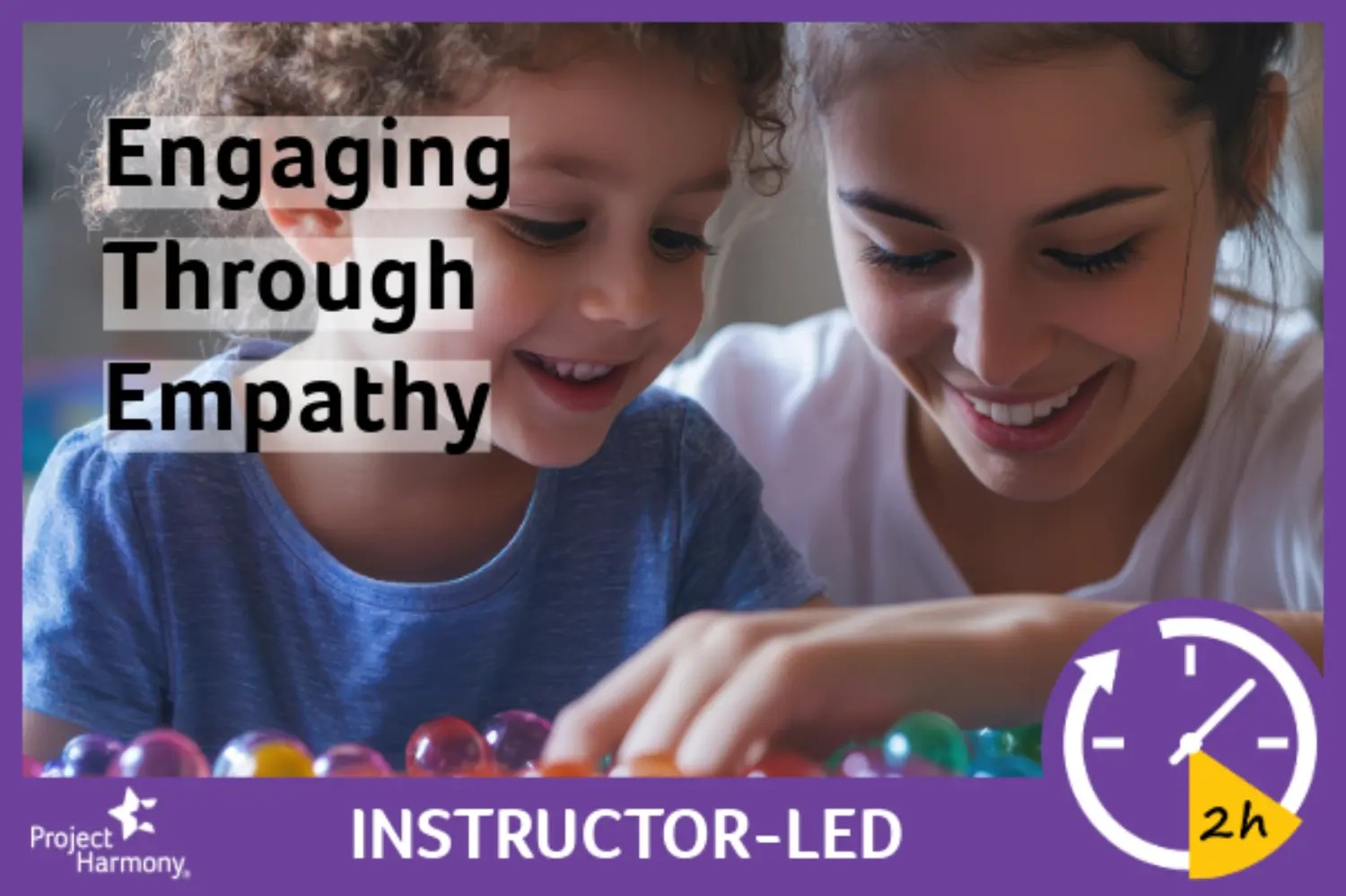
Engaging Through Empathy
Meet Dylan Sullivan, the single father of an 8-year-old boy named Joseph. He calls you because he says his son’s school won’t stop pestering him about Joseph misbehaving at school. He thinks that by calling your agency, he may be able to get them off his back. He also says he is interested in receiving any financial assistance you may have to offer. Can you help?Engaging through Empathy is a training where you will learn how you can approach clients in a way to create sustainable change by building relationships and meeting them where they are at.Please contact the Project Harmony Training Institute at training@projectharmony.com to request accommodations for participants hard of hearing
$50.00
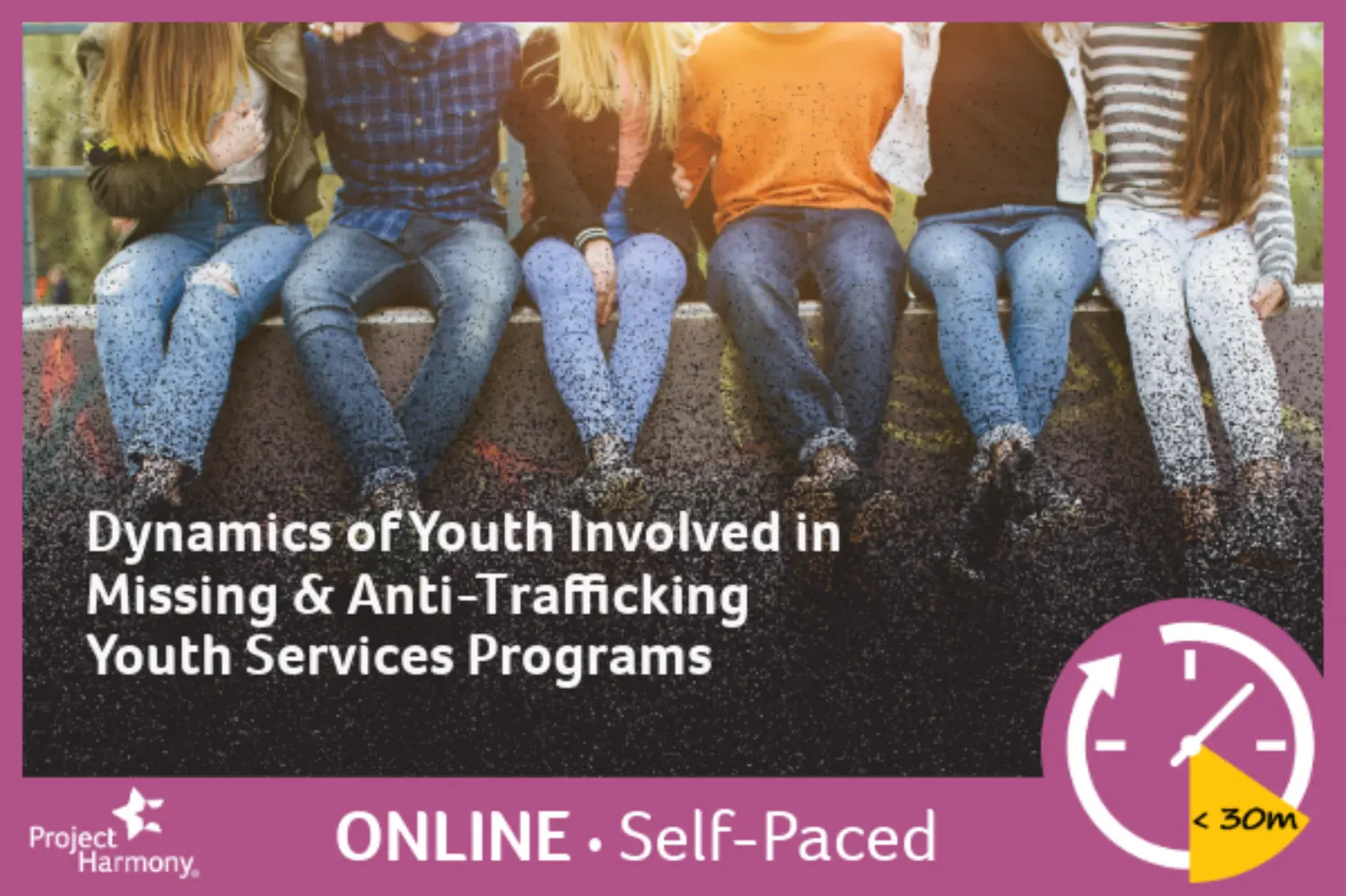
Dynamics of Youth Involved in Missing & Anti-Trafficking Youth Services Programs (Self-Paced)
Dive deep into the powerful ways trauma shapes the lives and behaviors of vulnerable youth involved in Missing and Anti-Trafficking Youth Services (MATYS). This course empowers you to spot the subtle—and sometimes challenging—signs of trauma, uncover key risk factors that signal the need for Child Advocacy Center intervention, and gain practical insights into the complex behaviors these young people may display while receiving services. Walk away equipped to respond with greater empathy, confidence, and skill—making a real difference in supporting youth on their path to healing and safety.
$0.00
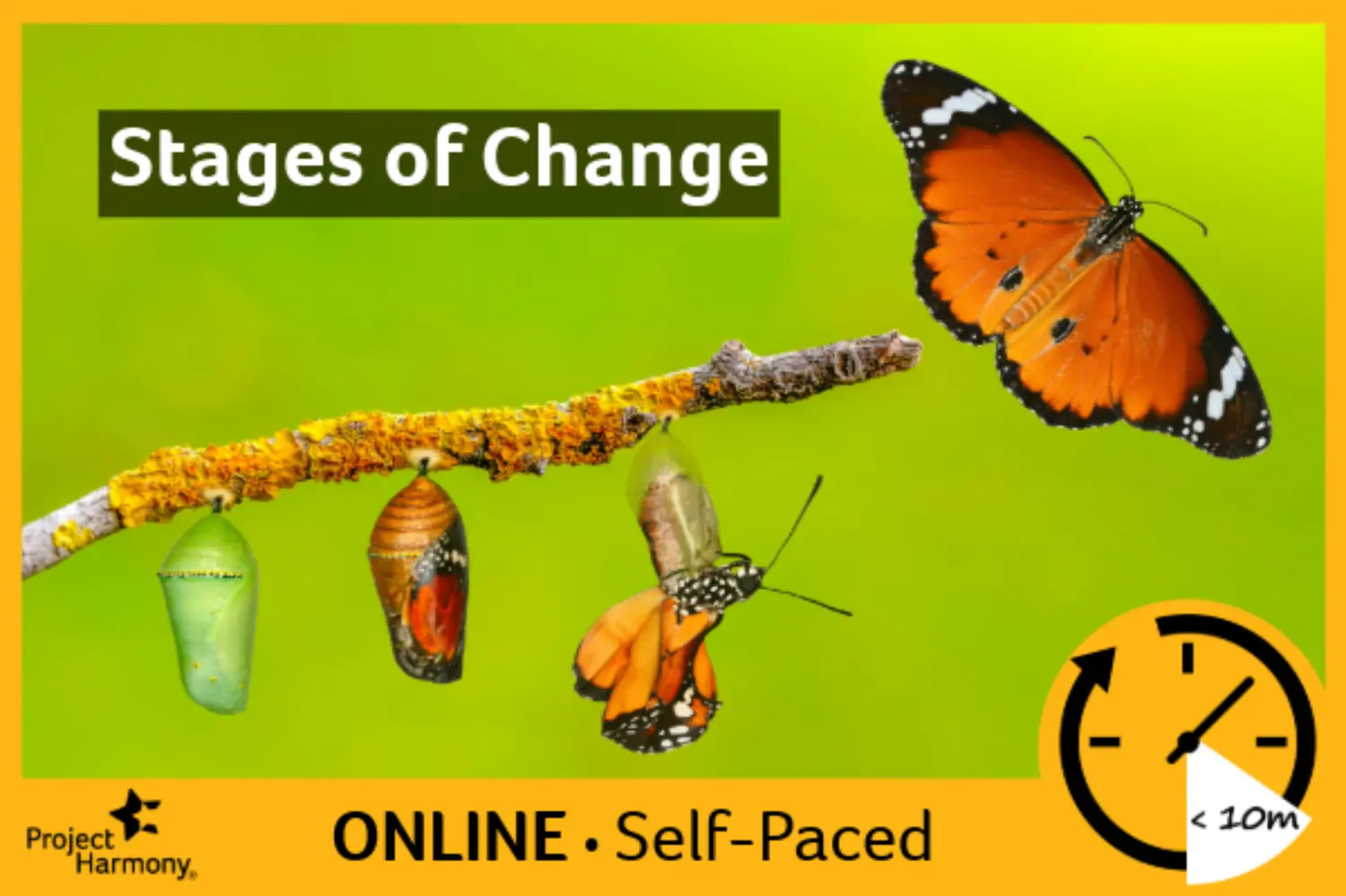
Microlearning: Stages of Change (Self-Paced)
The stages of change are a defined progression of attitudes and actions surrounding some kind of long-term change. These can be applied to workplace dynamics, personal goals, parenting, and more. Learn the vocabulary associated with these stages as a precursor to learning the nuances of behavioral change and ambivalence in Ready, Set, Change!
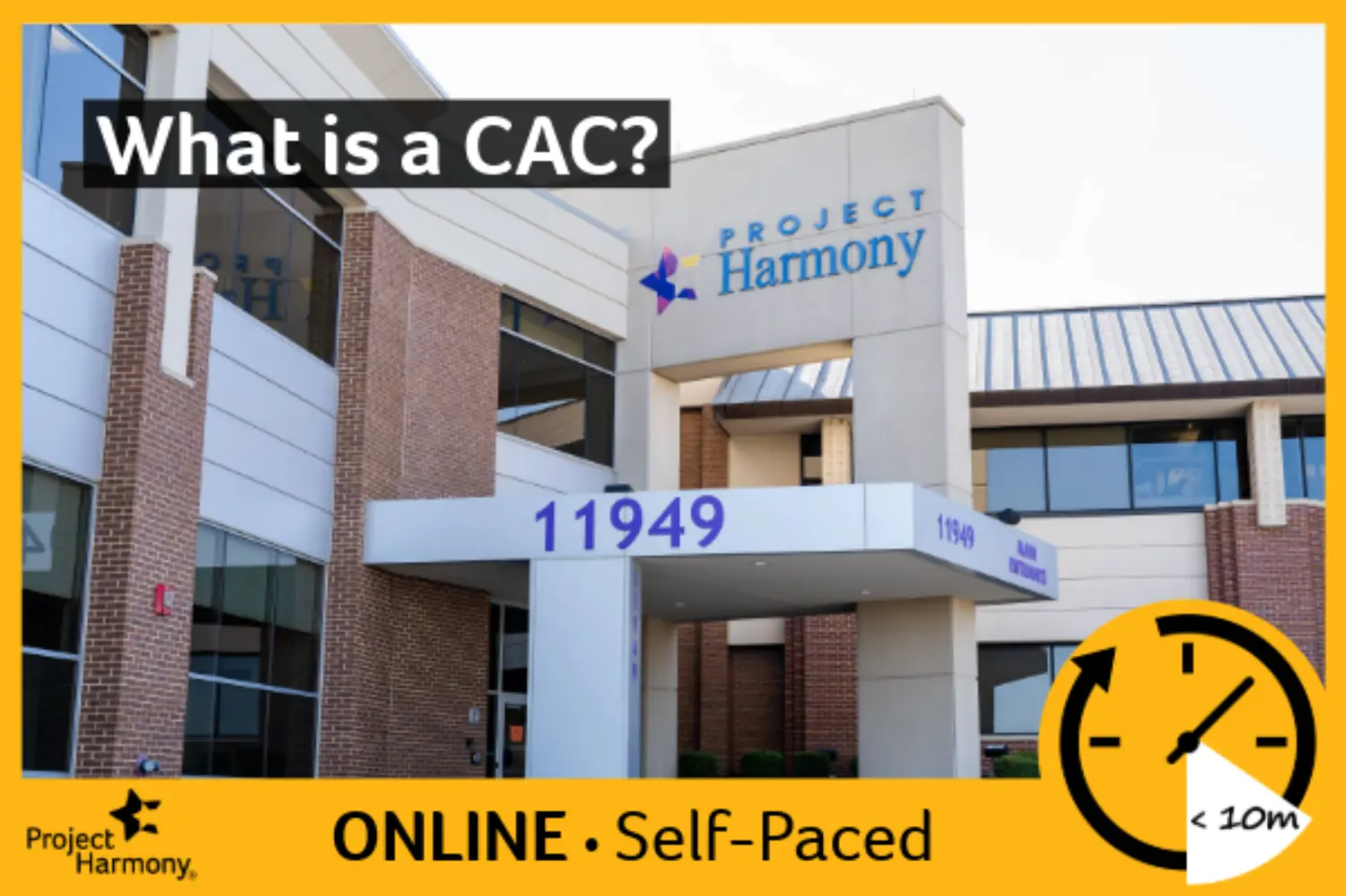
Microlearning: What is a CAC? (Self-Paced)
Watch this brief video to gather high-level information about what a Child Advocacy Center does on a daily basis and the hope CACs offer to families.
Microlearning: Anti-Trafficking Efforts in Omaha (Self-Paced)
Human trafficking isn’t just a headline in far-away cities – it’s happening right now, in our neighborhoods, schools, and even the heartland communities we call home, at rates that should shock every one of us. But there’s hope. Through a powerful partnership between Project Harmony and the Omaha Police Department, dedicated professionals are on the front lines every day—spotting the warning signs, reaching at-risk kids before traffickers do, earning their trust the hard way, and fighting to connect these brave children and their families with the life-changing support they desperately need. This course puts you in the middle of that fight. You’ll learn exactly how this collaborative, trauma-informed approach works, the real-world strategies that save lives, and how you can become part of the solution that protects our kids and shuts traffickers down. Join us. Because every child deserves someone who sees them, believes them, and refuses to look away.
Collaborating with Deaf and Hard of Hearing Interpreters
The training is designed to help professionals understand the diversity within the Deaf and Hard of Hearing communities and their cultures. Participants will understand what the proper approach is when they get a Deaf or Hard of Hearing consumer/individual and what is the proper accommodation needed to be provided. Also, to understand the proper usage and role of American Sign Language. Presented by: Sharon E. Price and Ashley WulfTarget Audience:Mental Health Providers, Law Enforcement, Child Protective Services, County Attorneys, Education Professionals, Youth Care Agencies, Non-Profit Agencies, Day Care Providers, Church Leaders, Medical Professional, and anyone who works with children and families.
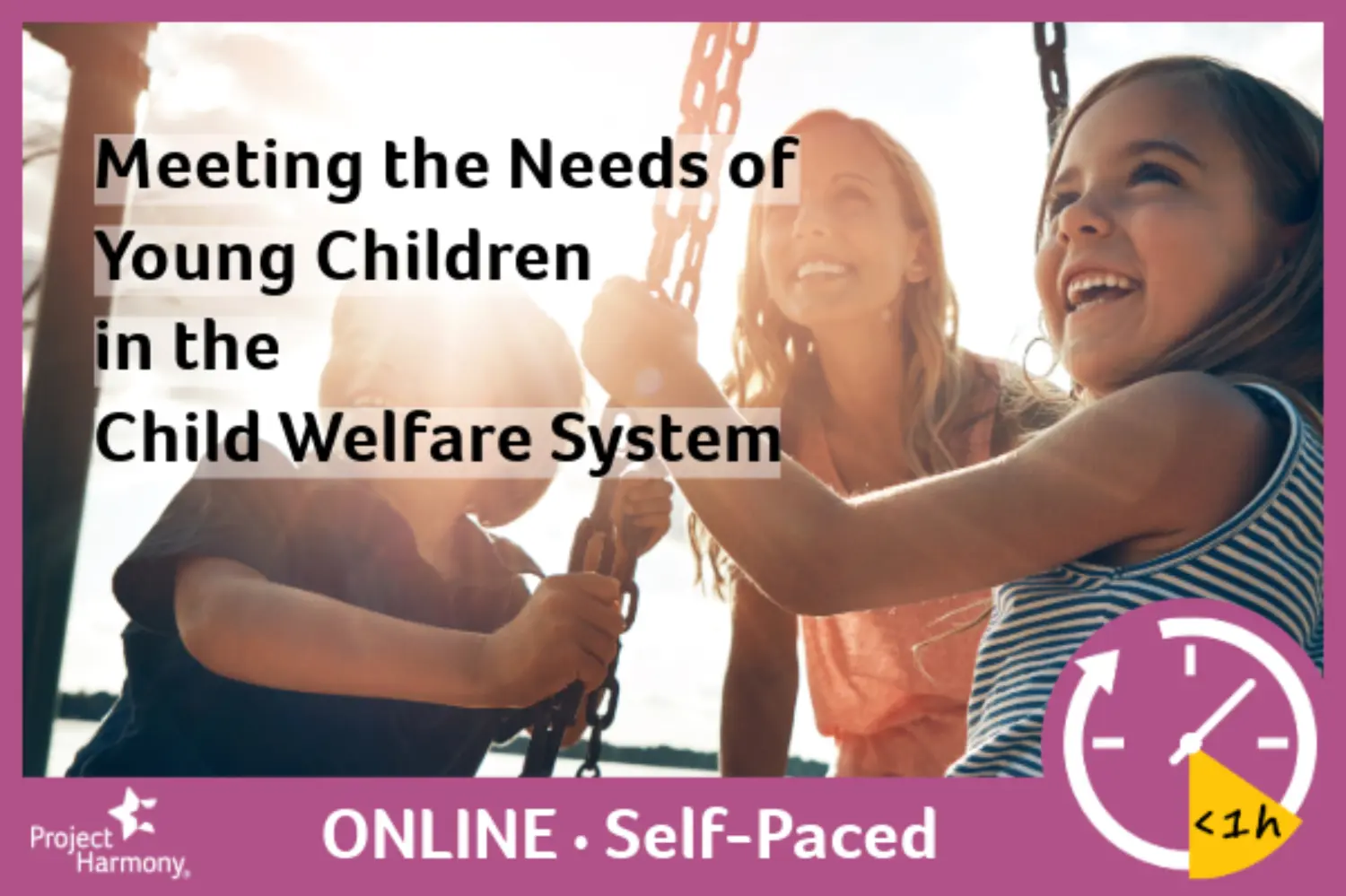
Meeting the Needs of Young Children in the Child Welfare System (Self-Paced)
Children from 0-5 years old are especially vulnerable to traumatic impacts on their development while involved in the child welfare system. Their biological development and sense of attachment is so moldable in those ages, and we must be mindful of the challenges we impose on them. Decisions within child welfare must be evaluated through early development and attachment lenses. These children are also eligible for a variety of helpful services that many people may not know exist.The programs described in this training are reflective of our experience in Douglas County, Nebraska. If you live elsewhere, brainstorm comparable options in your service area or contact Project Harmony for recommendations on getting started.We invite you to work through this training and take note of the resources and recommendations within.
Microlearning: Young Children in Child Welfare - Fact vs. Fiction (Self-Paced)
It's easy for myths and rumors to circulate. But when it comes to the well-being of children, especially those who have endured trauma, Project Harmony wants to set the record straight. Can you sort out the facts from fiction?
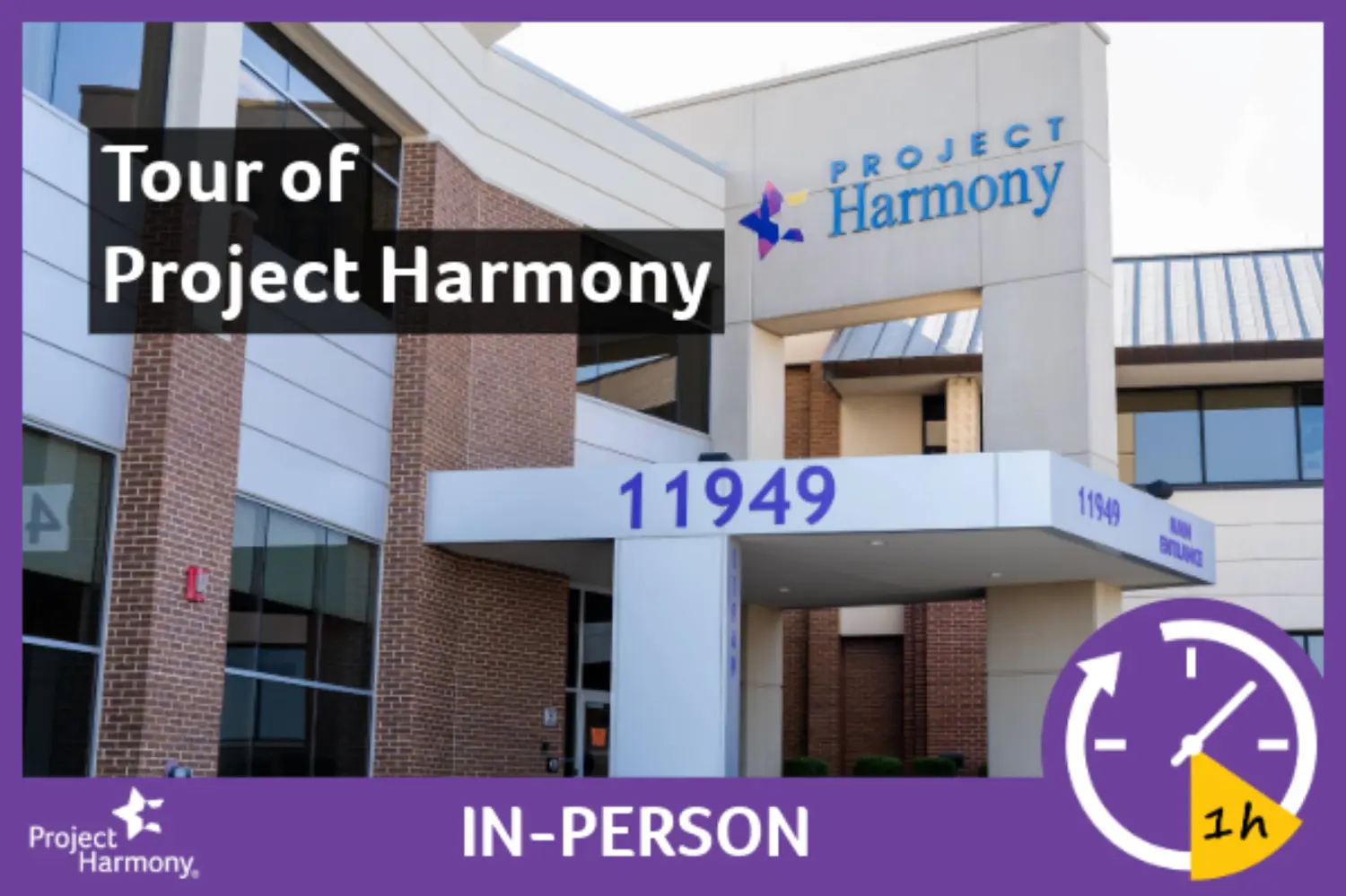
Tour of Project Harmony
The tour provides a history of Project Harmony and child advocacy centers, an overview of the various departments within Project Harmony, and the roles of our co-located partner agencies. Join us in person for a presentation of our campus.Please contact the Project Harmony Training Institute at training@projectharmony.com to request accommodations for participants hard of hearing
Microlearning: How to Recognize and Overcome Bias (Self-Paced)
In this course, you’ll look at the brain functions that cause bias, and the real and harmful consequences of even unintentional bias. You’ll also learn about common bias types. Finally, you’ll get strategies to break out of these mental habits and enjoy a more productive, engaging workplace and community. By bringing awareness to our unintentional assumptions, we can address and overcome the effects of implicit bias.
Child Abuse and Neglect 101 (Self-Paced)
This course educates community members about the basic definitions and responses to all types of child abuse and neglect, including physical abuse, sexual abuse, emotional abuse, neglect, exploitation, and trafficking. This training also describes the services of a Child Advocacy Center, like Project Harmony, and contains mock calls to the Nebraska Abuse and Neglect Hotline. Lastly, the training will cover elements of receiving a disclosure, calling the hotline, and common reactions. By outlining the process and observing realistic examples, learners will be more equipped to respond to a child in need. While most of the content is foundational to all discussions of abuse and neglect, references to statute are specific to Nebraska. Participants from outside of Nebraska are encouraged to investigate child abuse and neglect policies and procedures in their own state.
Microlearning: What Can I Say When a Child Tells Me About Abuse or Neglect? (Self-Paced)
This microlearning will identify five basic questions to ask or deduce when a child discloses abuse or neglect. The answers to these questions equip that trusted adult to call the Abuse and Neglect Hotline or 911. Learners should be able to reason why these are appropriate and envision how they would act in this kind of situation.
Child Abuse and Neglect 101 in Iowa (Self-Paced)
This course educates community members about the basic definitions and responses to all types of child abuse and neglect, including physical abuse, sexual abuse, emotional abuse, neglect, exploitation, and trafficking. This training also describes the services of a Child Advocacy Center, like Project Harmony, and contains mock calls to the Abuse and Neglect Hotline. Lastly, the training will cover elements of receiving a disclosure, calling the hotline, and common reactions. By outlining the process and observing realistic examples, learners will be more equipped to respond to a child in need. While most of the content is foundational to all discussions of abuse and neglect, references to statute are specific to Iowa. Participants from outside of Iowa are encouraged to investigate child abuse and neglect policies and procedures in their own state.
Microlearning: Window of Tolerance (Self-Paced)
Sometimes you're able to catch every curveball that comes your way. Other times, something basic (like dropping your keys) can be the last straw. See how the Window of Tolerance for Stress can fluctuate and impact your day, as well as other people's day.
Microlearning: Culture Shock (Self-Paced)
On an average day, it's easy to take one's native culture for granted. Clients, coworkers, and collaborators could be out of their element and be navigating through culture shock. Unpack this subconscious phenomenon and adopt compassionate strategies to work effectively with someone in an unfamiliar environment.
Don't Slime Me! (Self-Paced)
This is a micro mobile lesson about what it means to "slime" others when debriefing intense experiences. Do your best to avoid this tempting behavior and preserve a trauma-informed workplace or household.
Nonverbal Empathy (Self-Paced)
This is a micro mobile lesson about focusing attention on the nonverbal cues you use to express empathy.
Trauma-Informed Word Choice (Self-Paced)
This is a micro mobile lesson about selecting words, phrases, and idioms that do not evoke imagery of violence or traumatic history.
Mindfulness and Chocolate (Self-Paced)
This is a micro mobile lesson to coach learners through a mindfulness exercise with a bite-sized piece of chocolate.
OARS Interviewing for Beginners (Self-Paced)
This is a micro mobile lesson to unpack the acronym "OARS" for effective interpersonal communication.